Kostüme are a Bristol-based, apparel brand, producing innovative kit for cyclists whilst focusing on sustainability and environmental responsibility – something we can fully relate to, and so we wanted to learn more about all that they do…
Kostüme doesn’t follow the typical seasonal collection calendar – you launch new kit when it’s ready, not just because it’s September. How does that mindset change the way you design and deliver cycling gear?
We start by focusing on solutions, not seasons. Our mantra is that we only make products we believe that we can measurably improve (which is why we don’t make something obvious like socks. There are enough socks already!)
And because we aren’t tied to seasons or wholesale, we never, ever rush development. It’s ready only when I believe the product is perfect – or as close to perfect as possible.
I think launching into a highly technical and competitive space like cycling apparel with a 10/10 review from a highly respected journalist for our cycling shorts was perhaps the ultimate statement of intent.
Your preorder model means nothing gets made until someone actually orders it. What’s the biggest lesson you’ve learned from running a make-what-sells system?
You absolutely uncompromisingly MUST give the consumer something new, something different, something better. Ideally all three at once, all of the time, from product right through to customer service. With so much product that already exists, and constant heavy discounting, consumers simply won’t pay full price and then wait 6 weeks for delivery unless there is a very clear and compelling reason to do so.
Fortunately, the try>trust>evangelise loop is incredibly strong in technical sports like cycling, and so this positive sentiment has allowed us to grow significantly without relying on paid ads.
But the biggest overall learning is just how everything compounds over time, and how it positively impacts so many areas of the business. For example, because we aren’t always spamming our mailing list with the usual discount sales, we get incredible open and click rates, because people know it’s likely something they will want to read. It’s certainly not an easy option, but everything about it is objectively better, starting with our products.
You use premium recycled materials and make small batches to reduce waste – sustainability is clearly baked into your DNA. How do you balance that with the need for technical performance on the bike?
Thanks to the huge waste cut by our preorder model, we can spend significantly more on our product specs (2-3 times more in some cases) which in turn means we are able to work with the very best Italian factories and fabric mills. There have been leaps and bounds made in recent years with regards to incredibly high performance sustainable fabrics, and our entire range consists almost entirely of recycled and regenerated materials.
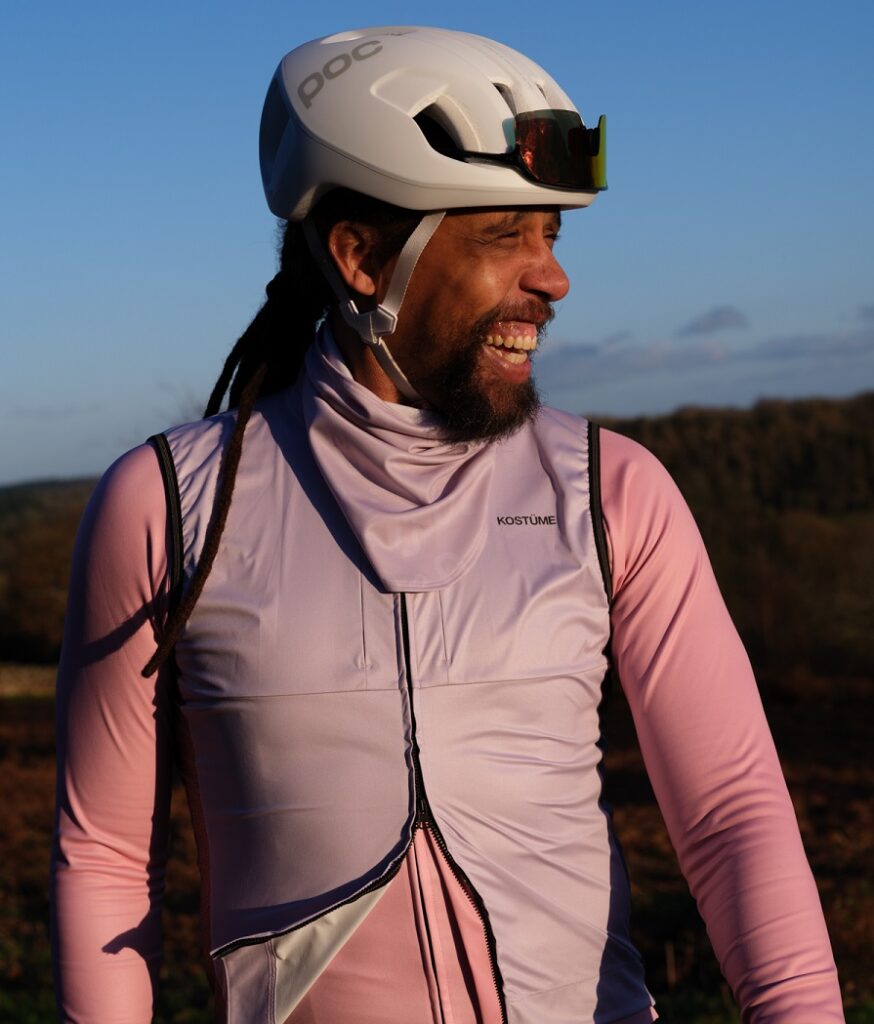
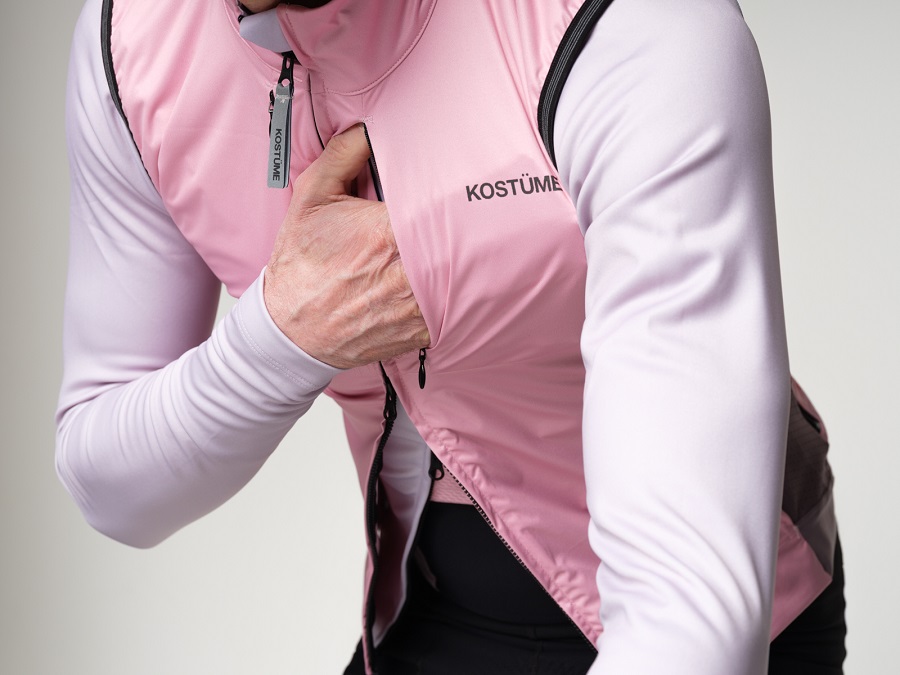
Mono-material technical outerwear fabrics like the Polartec Power Shield RPM used on our Cargo Gilet are not only designed for circularity, but they also combine details that would have seemed impossible not long ago, including 4-way stretch, fully printable colour and category-leading breathability. Every fabric we choose has to perfectly combine performance, comfort and longevity, and we are constantly seeking improvements. For example, in March we will release a brand-new update of our Cargo Jersey featuring a new UPF50 recycled fabric for added sun protection.
Every product tells a story – #EDIT001 had artwork by Kai & Sunny, #EDIT002 featured artist Alice Irwin. How important are these artistic collaborations to Kostüme’s identity?
Coming from a decade spent in the art world supporting artists, I wanted to approach Kostüme with a better balance when it comes to collaborations. We work very closely with our artistic partners. Every piece is a brand-new physical artwork that we commission and purchase, and the apparel exists strictly in a limited-edition batch, which is akin to the kind of print editions that artists already produce. In fact, in some cases, such as the forthcoming Adam Ball collaboration in March, we also produce a print edition, and the Kai & Sun one completely sold out. We are essentially offering both the artists and our customers something unique and different.
Looking ahead, one of the other benefits of our preorder batch model is that we can take the kind of creative and commercial risks with our launches that traditional brands simply couldn’t, and we already have some exciting plans on the horizon, so stay tuned!
Many clothing brands lean on discounting to move stuff they’ve overproduced. You don’t do that. What’s the upside (or unexpected surprise) of sticking to a preorder batch model, beyond reduced waste?
This is a great question, and one I wish we were asked more, because it really gets to the heart of the current issues with apparel retail in general.
As I mentioned earlier, the biggest thing is just how all the benefits – and the scale of the benefits – compounds as you grow. There are so many brilliant little insights. For example, you’d assume the 6-week wait after ordering would be a huge negative, but in fact our customers have overwhelmingly said that the anticipation puts some excitement back into shopping, like buying your future self a gift!
I think the strength of the customer response has been the biggest surprise overall. We were incredibly confident that we could repeatedly design and produce award-winning kit, otherwise we wouldn’t have started the brand. And our research suggested there was definitely an audience who wanted something better than the current offerings. But I hadn’t realised just how frustrated so many people actually were with the status quo, and how passionate they would be about what we are doing. And it’s that which keeps me focused and motivated. I will never take that for granted.
What’s the one piece of Kostüme kit you think every cyclist should try at least once and what adventure would you pair it with?
Our bib shorts are the piece that put us on the map, however I would say our new Cargo Gilet, which features the amazing Polartec Power Shield RPM fabric. A gilet is such an important tool in the cyclist’s arsenal, and we’ve designed this to be the ultimate in both performance and functionality.
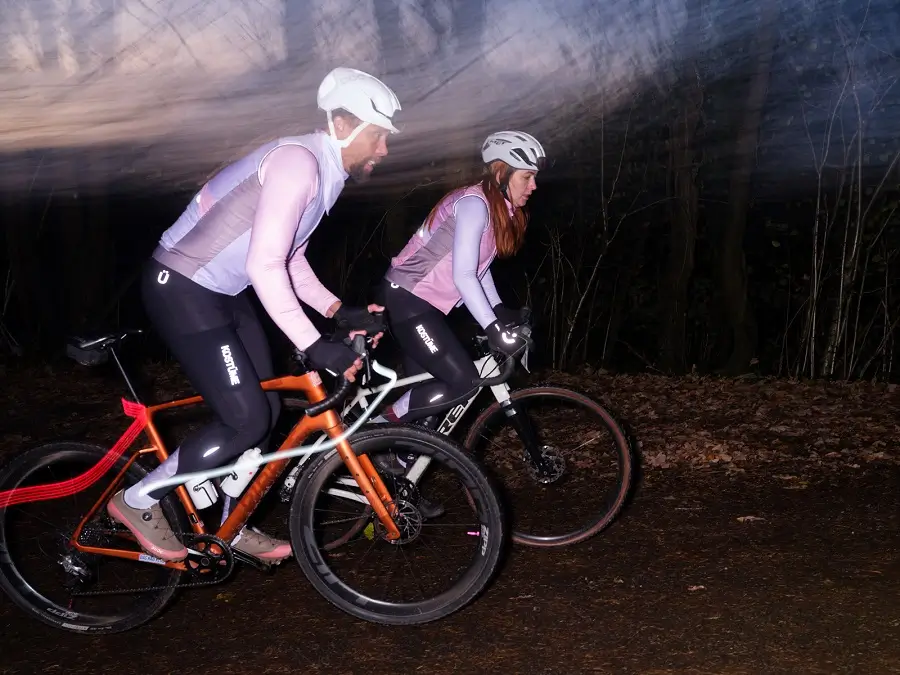
I’d use it to ride my favourite Spring Audax – a 200km loop from Chepstow to Gospel Pass and back, via The Tumble. At this time of year, starting and ending a ride in the dark adds to the feeling of a real adventure, despite taking less than 12 hours to complete. And a waterproof, breathable, stowable outer layer with plenty of carry capacity is a must.
Performance fabrics are amazing, but only if riders look after them! Why is aftercare so important for making cycling kit last longer and performing better?
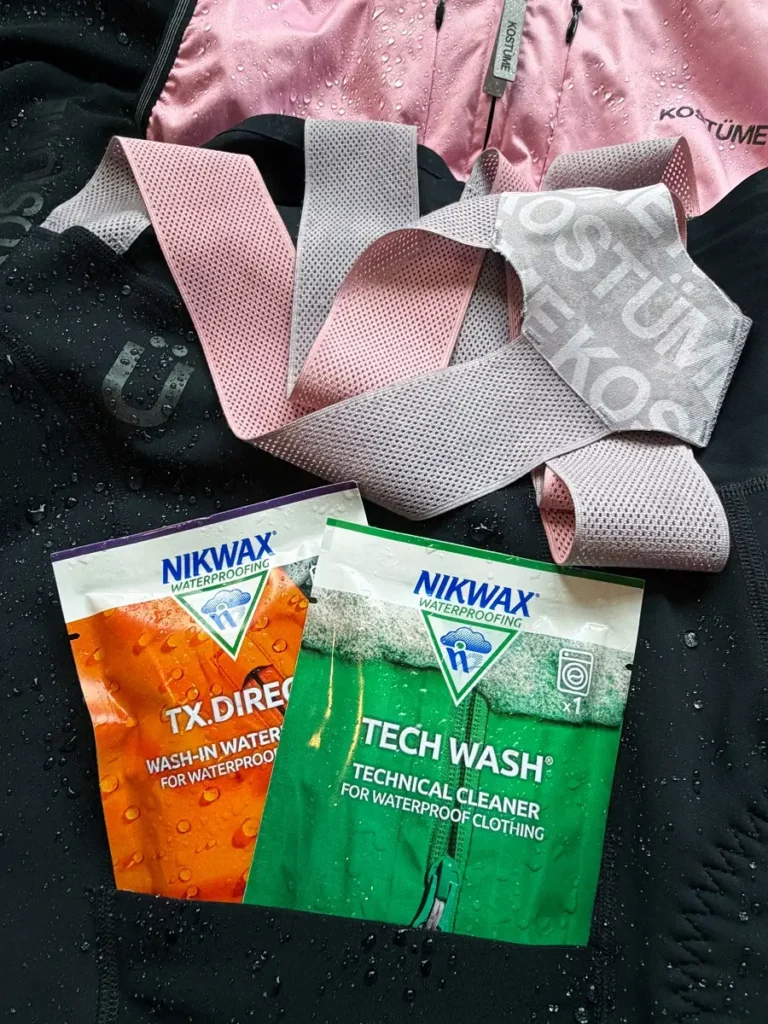
The most sustainable piece of kit is the one you already own, so making your kit last as long as possible – and perform to its fullest potential – is just about the biggest positive impact you can have. I’ve trusted Nikwax with the care of my technical gear as a consumer for literally decades, and it has sustainability baked into its DNA too, which is befitting of Kostüme’s values. And ultimately your wallet will also thank you for leaving more money for your next adventure.
After a cycling adventure, looking after your kit is part of getting ready for the next one. What does “being ready”mean to Kostüme – for the next ride, or the next few years?
I believe that it’s our role as a brand to be constantly looking ahead, making difficult decisions, and presenting the best version of ourselves and our products so that our customers can focus their energy on riding their bikes.
Too much emphasis is put on consumer decisions and behaviour – especially when it comes to sustainability – when in reality it should be the responsibility of the ‘industry’, from the materials to the manufacturers to the retailers.
Being ‘ready’ for me is making sure that Kostüme is as rigorous and uncompromising as possible in all our decisions that feed into every single new product that we bring into the world. Because if there is one thing that neither consumers nor the planet needs, it’s yet another unsold, unwanted product that didn’t need to be made.